If you love wide front porches, sunlit rooms, and walkable Tulsa history, Riverview in 74119 delivers. Tucked just south of downtown and near the river, the district blends everyday bungalows with standout landmarks in a tight, character-rich area. In this guide, you’ll learn the key home styles, how they live day to day, what to check during a showing, and how tax incentives and local rules work. Let’s dive in.
Riverview at a glance
Riverview Historic District sits directly south of downtown. The National Register listing notes boundaries that run roughly from W. 12th/13th Street on the north to Riverside Drive/14th Place on the south, and from S. Jackson Avenue on the west to the alley east of S. Elwood/Denver on the east. The district was listed in 2007 on the National Register of Historic Places (NRIS 07000906), with a cohesive collection of early 20th century houses and apartments. You can explore a concise overview and notable examples through the Tulsa Preservation Commission’s Riverview page.
- Learn more about the Riverview listing and other Tulsa districts at the National Register site: National Register districts in Tulsa
- Get a neighborhood overview and key properties at the Tulsa Preservation Commission: Riverview Historic District
Core styles you’ll notice
Craftsman and bungalows
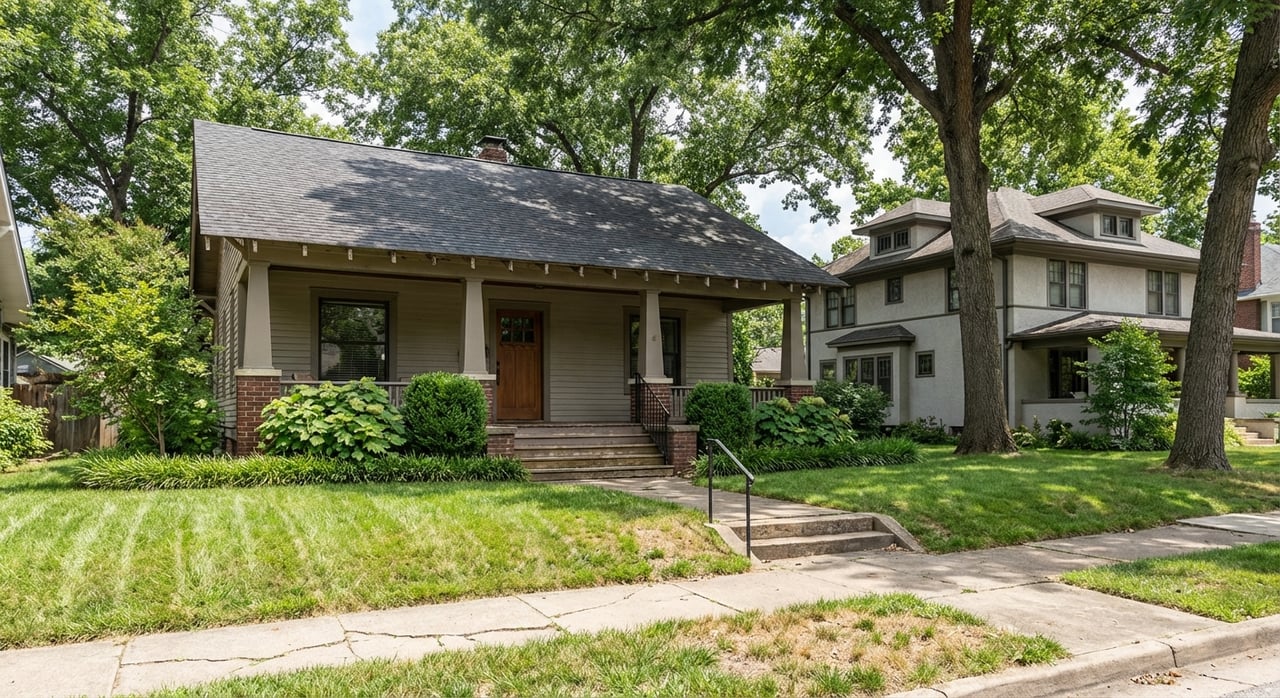
The single-family Craftsman bungalow is Riverview’s most common house type. Look for low-pitched gabled roofs, broad eaves with exposed rafter tails or knee braces, and generous front porches with tapered or square columns on brick or stone piers. Interiors often have built-ins and living rooms that flow into dining rooms, with modest kitchens and baths by today’s standards. Many date from 1911 to 1938, Riverview’s primary building era. For a style primer and development timeline, see the Oklahoma State University architecture collection.
American Foursquare
Foursquares are two-story, boxy homes with hipped roofs and a central dormer. The floor plan is practical and consistent, which makes it easier to add an upstairs bath or rework a kitchen without changing the footprint much. Many carry Craftsman, Prairie, or Colonial Revival trim for visual interest. These homes feel roomy while still fitting modest city lots.
Period revival homes
You will also see Colonial Revival, Tudor Revival, and Spanish or Mission-influenced designs throughout the district. Colonial examples lean symmetrical with classical door surrounds. Tudor homes often feature steep front gables, decorative half-timbering, and prominent chimneys. Spanish and Mission variants bring stucco walls and clay tile roofs. For notable high-style landmarks such as McBirney Mansion, the Clinton–Hardy House, and Riverside Studio by Bruce Goff, visit the Tulsa Preservation Commission Riverview page.
Historic apartments near the river
Along Riverside Drive and around 19th Street, several 1920s apartment buildings add variety to the streetscape. They generally use compatible materials such as brick and stucco and align with the district’s scale and character. These buildings help frame the river edge and show Riverview’s early multifamily story. Find more historical context in the OSU architecture collection entry.
Materials and details
Across Riverview, you’ll find wood clapboard and shingle siding, brick veneer and solid brick, stucco, and stone accents. Original wood-sash double-hung or casement windows are common. Porches, chimneys, and decorative masonry appear at many scales, with clay tile on some Spanish-influenced roofs. For examples across the district, see the Tulsa Preservation Commission’s overview.
How the homes live
Bungalows for easy living
Bungalows offer one to one-and-a-half stories, which can be appealing if you want fewer stairs. Rooms are usually smaller, and kitchens or baths may feel compact compared to newer homes. Owners often open or reconfigure kitchens or plan a discreet rear addition instead of altering the street-facing elevation. Dormers can create a bonus room or office.
Foursquares for flexible space
If you want more bedrooms and a logical layout, a Foursquare delivers. The two-story plan supports an extra bath or larger kitchen without major expansion. You get usable space on both floors, which suits a range of household needs while staying true to the home’s character.
Period revivals for presence
Revival homes vary by subtype. Brick and stone examples can have thicker walls and a different maintenance profile than wood-clad bungalows. Rooms may be larger or more compartmentalized. These houses often feel distinctive on the block and reward careful upkeep.
Porches and outdoor life
Front porches are a signature lifestyle feature in Riverview, especially on bungalows. They extend living space and create natural curb appeal. Preservation guidance generally discourages enclosing historic front porches, since it changes the character that makes the district special. For a broad look at porch repair and best practices, the National Park Service’s preservation topics are a strong reference: NPS Preservation by Topic.
Comfort and energy
Original windows provide generous daylight but are less efficient than modern units. The National Park Service recommends repair and weatherization as the first step, not immediate replacement. Tactics include reglazing, weatherstripping, and adding storm windows for better performance while preserving character. Read the NPS guidance on window weatherization here: NPS weatherization for historic windows.
Older homes may also need HVAC updates and targeted insulation, especially in attics and basements. These improvements can boost comfort without changing the features that define the home’s look.
Maintenance priorities
Wood: siding, trim, porches
Common concerns include paint failure, rot at porch posts and stair connections, and decayed rafter tails. Plan for regular paint cycles and isolated wood repairs rather than wholesale replacement. Keep water away from porch connections with proper flashing and drainage. For technical how-tos, see NPS Preservation by Topic.
Masonry and stucco
Brick and stone need repointing with mortar that matches the original in strength and breathability. Hard modern mortars can damage historic masonry. Stucco may show hairline cracks that respond to gentle, compatible repair methods. Preservation Briefs on masonry and stucco are covered in NPS Preservation by Topic.
Roofs and chimneys
Bungalows typically carry gabled roofs with asphalt shingles, while some revival homes may have steep roofs with clay tile or slate. Clay tile and slate are long-lasting but need specialized trades for repair. Chimney crown and flashing failures are common water entry points, so inspect them early. For representative styles and materials, see the Tulsa Preservation Commission’s Riverview guide.
Windows: repair first
Repair often outperforms replacement in cost and sustainability over time while preserving the home’s look. Prioritize reglazing, weatherstripping, and tight-fitting storm windows. Full replacement should be a last resort, and it can affect eligibility for certain tax reviews. The NPS covers a repair-first approach here: NPS weatherization for historic windows.
Lead paint and older systems
Most pre-1978 homes should be treated as if they contain lead-based paint. Use an EPA RRP-certified contractor for any work that disturbs paint. Read the consumer guide here: EPA RRP lead program.
Electrical systems may include knob-and-tube or cloth-insulated wiring, and legacy two-prong circuits. Have a licensed electrician inspect panels and circuits, then prioritize upgrades and modern protection. Local contractors flag these as recurring issues in early 20th century Tulsa stock. Learn more about common questions here: Tulsa-area electrical issues.
Rules and incentives
National Register vs. local rules
National Register listing is primarily honorary. It recognizes significance and can open the door to tax incentives, but it does not restrict a private owner from altering or demolishing a property by itself. Local historic overlays or landmark designations are what trigger design review. For an excellent overview, see the Tulsa Planning Office guide: Creating a National Register Historic District. To check local review needs, contact the City’s preservation staff listed here: City of Tulsa boards and commissions.
Tax credits that may apply
- Federal: The Historic Rehabilitation Tax Credit offers 20% for certified rehabilitation of income-producing historic buildings that meet the Secretary of the Interior’s Standards. Process and technical guidance start here: NPS Preservation by Topic.
- Oklahoma state: The State Historic Preservation Office administers complementary state credits. Eligibility and steps are outlined here: Oklahoma SHPO tax credits.
If you plan to use credits, consult SHPO early. Timing, scope, and documentation matter for approvals.
Renovation workflow
- Document and survey: Photograph the exterior and key interior features, including porches, chimneys, windows, foundations, built-ins, and mantels. The OSU collection is a good reference for period-appropriate details: Riverview overview.
- Inspect systems: Bring in a structural engineer if you see settlement, plus licensed trades for electrical, plumbing, and HVAC. If paint may be disturbed, hire an EPA RRP-certified pro: EPA RRP.
- Coordinate early on incentives and review: If you want tax credits or your scope touches character-defining features, consult SHPO and the Tulsa Planning Office before work begins: Oklahoma SHPO credits and Tulsa Planning overview.
- Use trusted technical briefs: The NPS Preservation Briefs guide best practices for masonry, porches, windows, and energy upgrades in historic buildings: NPS Preservation by Topic.
Quick buyer checklist
- Roof, gutters, and flashing: Look for wear, water stains, and active leaks.
- Porches and steps: Check for sagging posts, soft treads, and prior enclosures.
- Windows and trim: Identify original sash, glazing putty condition, storm windows, and signs of rot under sills.
- Chimneys and masonry: Check mortar for mismatched color or texture that may signal hard, incompatible repointing.
- Systems snapshot: Panel age, wiring type, HVAC capacity, and plumbing materials.
- Site drainage: Confirm grading runs away from the house. Tulsa can see heavy spring rains, so water management matters. For local climate context, see NWS Tulsa climate.
- Lead-safe planning: For pre-1978 homes, assume lead paint and plan compliant work with RRP-certified pros.
Why Riverview appeals
You get character, location, and variety in one district. Craftsman bungalows offer cozy, porch-forward living. Foursquares provide flexible space on a modest lot. Revival homes deliver architectural presence. Along the river edge, 1920s apartments show how Riverview grew beyond single-family homes.
If you value historic charm with practical potential, 74119 is a smart place to buy, renovate, and hold. With the right sequence and a repair-first mindset, you can preserve what makes the home special while improving comfort and value.
Ready to explore options, from classic bungalow living to a strategic renovation plan? Connect with Howard Grant to map your next steps in Riverview.
FAQs
Where is Riverview and why is it historic?
- Riverview sits just south of downtown Tulsa, with a district recognized on the National Register of Historic Places for its early 20th century homes and apartments built mainly from 1911 to 1938.
Do National Register rules limit my renovations in 74119?
- The National Register is primarily honorary and does not restrict private owners, but local overlays or landmark designations can require design review, so check with the Tulsa Planning Office.
Which Riverview style offers the most flexible space?
- The American Foursquare’s two-story, square plan makes adding baths or updating the kitchen easier without enlarging the footprint.
How should I handle old windows in Riverview homes?
- Follow a repair-first approach with reglazing, weatherstripping, and storm windows; NPS guidance shows this preserves character and improves efficiency.
Are there renovation tax credits for Riverview properties?
- Income-producing historic properties may qualify for a 20% federal credit and state credits in Oklahoma; consult SHPO early to confirm eligibility and process.
What should I inspect first during a Riverview showing?
- Start with roof and porch condition, electrical panel and wiring type, and lead-safe planning for any pre-1978 paint work.