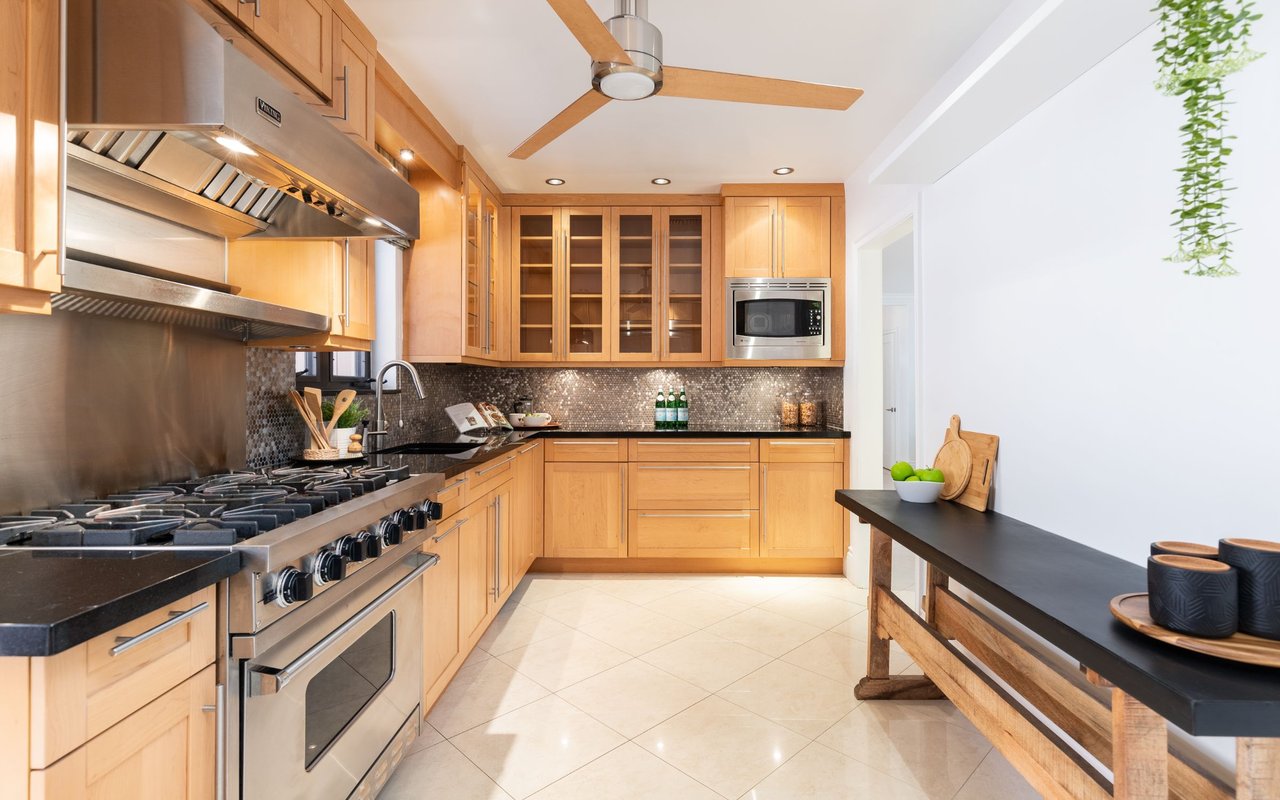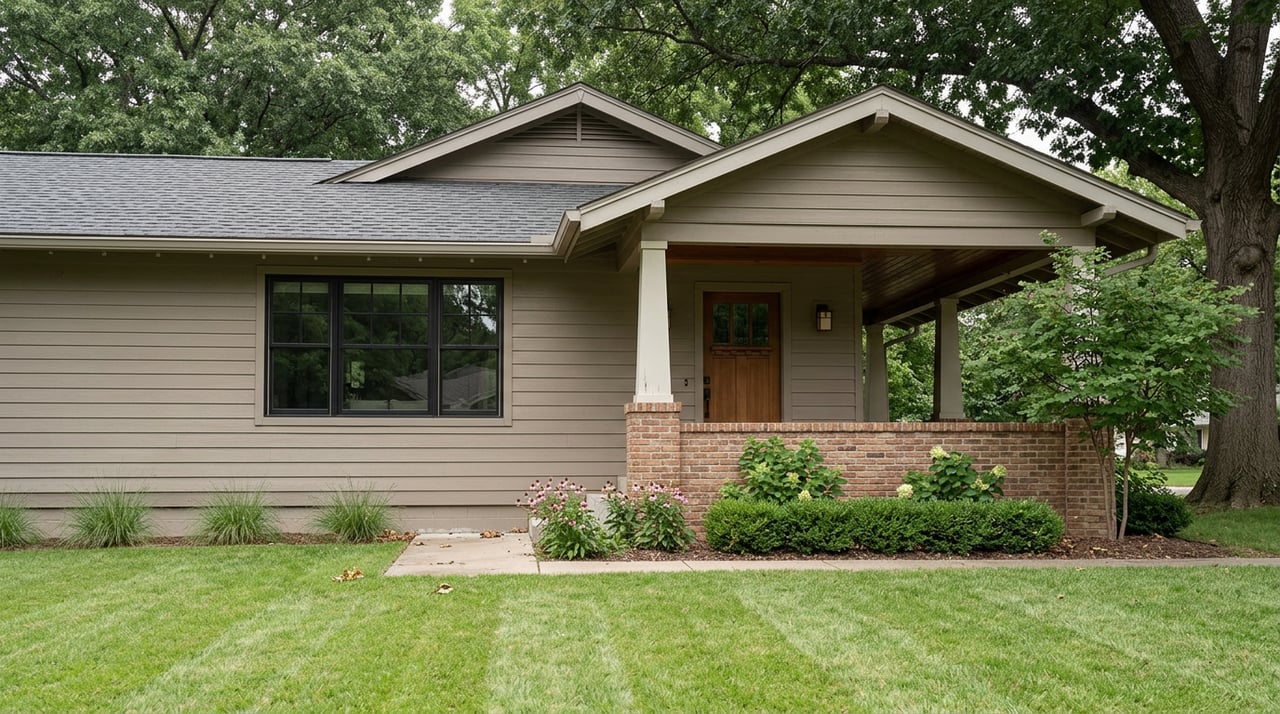
Picture two buyers touring homes the same Saturday, both working with a budget around $290,000. One walks through a 1948 brick bungalow three blocks off Cherry Street: 1,450 square feet, hardwood floors that dip slightly near the back door, no garage. The other tours a nearly finished four-bedroom in a Broken Arrow subdivision: 2,300 square feet, three-car garage, builder walkthrough scheduled for next week. Same price range. Almost 900 square feet apart.
Most people file that gap under "Midtown is older and pricier, Broken Arrow is newer and bigger" and move on to the next showing. That explanation gets you halfway there. The other half is sitting in a zoning ordinance nobody hands you at the door.
Here's the part that surprises most buyers once they dig in: it isn't a zoning upside driving Midtown's number. Tulsa did pass a zoning change in 2021 that lets certain near-downtown lots add a duplex or an accessory unit without a fight, but the published list of neighborhoods that got it doesn't include the Cherry Street and Brookside blocks most people mean when they say "Midtown." What's actually pricing those blocks is older and simpler: land valuable enough that, under ordinary single-family rules, a small old house has to compete with what a builder could put there instead. Broken Arrow doesn't have either mechanism, because almost everything for sale there is new enough that nobody's deciding whether to replace it yet.
The Two Spreadsheets
Run the numbers side by side and the gap is real, not a rounding error.
| Market | Price per sq ft | Time window | Days on market |
|---|---|---|---|
| Midtown, zip 74104 | $198 | March 2026 | not reported |
| Midtown (broader boundary) | $176, up 4.1% year over year | October 2025 | 27 days |
| Broken Arrow | $157, up 1.9% year over year | January 2026 | 48 days |
| Tulsa metro average | $142 | March 2026 | not reported |
Midtown's 74104 zip code is running well above the metro average on a per-square-foot basis, and the broader Midtown boundary was still climbing faster than most of the city as of late 2025. Broken Arrow, by contrast, sits below the metro average per square foot even though its overall home prices are higher, because the homes themselves are bigger. A buyer glancing at these two numbers alone would reasonably conclude Broken Arrow is the better value and Midtown is the premium play. That conclusion misses the part of the price that isn't attached to square footage at all.
The Zoning Story Everyone Gets Wrong
In December 2021, the City of Tulsa's Neighborhood Infill Overlay took effect, and it's easy to assume it blanketed every older neighborhood ringing downtown. It didn't. City Council records from that year name the neighborhoods that got it: Riverview, Crosbie Heights, the Heights, Crutchfield, the Pearl District, part of Greenwood, and areas immediately north of Cherry Street. Inside those boundaries, a homeowner on a qualifying lot can add an accessory dwelling unit by right, build a duplex or townhome as a permitted use, and get by with half the usual off-street parking, two spaces for a duplex instead of four.
Cherry Street south into Brookside and Swan Lake, the stretch most buyers picture when they say "Midtown," isn't on that list. So whatever is pushing Midtown's price per square foot above the metro average, it isn't a legal right to add a second unit.
What it more likely is: land valuable enough that, under plain single-family zoning, an older, smaller house has to compete with what a builder could put on that same lot instead. The Tulsa Foundation for Architecture has flagged exactly this stretch, Cherry Street, Swan Lake, Brookside, and the area around Utica Square and Woodward Park, as the part of the city where older homes are most likely to come down, precisely because there's no special permission required to build bigger. Ordinary zoning and a valuable lot are enough.
The zoning news everyone's heard about this year never touched Cherry Street or Brookside. What's pricing those blocks isn't legal upside. It's a lot worth enough to tear down and replace, permit or no permit.
Why Broken Arrow Doesn't Have Either Lever
Broken Arrow's inventory tells a different story because it's built on a different foundation, literally. Most of what's for sale is new construction on greenfield subdivision land, governed by builder covenants that specify single-family use and larger minimum lot sizes. There's no overlay unlocking a duplex on these parcels, and there's no teardown math either, because there's no housing stock old or undervalued enough to replace in the first place.
Walk through what's actually active in Broken Arrow right now and the builder names repeat: D.R. Horton, Schuber Mitchell, Simmons Homes, Capital Homes, Malibu Homes. The communities read like a list of subdivision phases rather than neighborhoods with a hundred years of history: Ironwood, Highland Ridge, Pine Valley Ranch, Patterson Farms, The Estates at Ridgewood. New-construction listings across these communities carry a median asking price near $330,000, which sits well above Broken Arrow's overall resale median. That gap tells you the new-build premium, not land scarcity, is doing most of the work in what buyers pay per square foot out there.
None of that is a knock on Broken Arrow. It's a different kind of value proposition entirely: more finished square footage, a builder warranty, and a straightforward transaction with fewer variables. You're paying for what's already built, not for what the lot could become.
The Number That Doesn't Fit the Story
Here's where the data gets genuinely interesting, and where the two markets diverge from what basic supply-and-demand intuition predicts.
As of a February 2026 market pull, Broken Arrow's housing supply sat at 1.95 months, well under the three-month threshold that typically signals a seller's market. Homes were moving in 54 days, a full 28% faster than the year before. Sale-to-list ratio held steady at 98.7%. By every textbook signal, tight supply plus faster sales should be pushing prices up.
Instead, Broken Arrow's median home price was down 2.81% over that same year.
Tight inventory and a falling median price aren't supposed to happen together, and the likely explanation is a shift in what's actually selling. When a market's new-construction pipeline leans toward smaller, lower-priced starter product in a given month, and enough of those units close, the median can slide even while every individual seller is getting close to full asking price. The market isn't getting cheaper. The mix of what's selling is getting smaller. That's a distinction worth understanding before you assume a falling median means Broken Arrow prices are softening across the board.
Midtown, meanwhile, isn't seeing that kind of mix problem, because there's very little new construction to shift the average. What's for sale is largely the same aging housing stock it's always been, on lots that keep getting more valuable to a builder even without any special zoning attached. That's part of why the appreciation on a per-square-foot basis has held up even as days on market stayed short.
It's also worth knowing that Tulsa's City Council has been working to extend the overlay into more of the city, and Midtown still isn't the destination. A boundary expansion covering parts of Council Districts 1 and 3, in north and east Tulsa, was initiated in January 2026 and, as of its most recent public update in May 2026, had been recommended for approval by the Tulsa Metropolitan Area Planning Commission ahead of further City Council hearings. If you were hoping this year's zoning news would eventually reach your Cherry Street or Brookside lot, this particular proposal doesn't do that. It's a different part of the city being added to the list.
What This Means If You're Actually Choosing
If Midtown is on your list and duplex or ADU flexibility matters to you, don't assume this year's zoning headlines apply to your block. They likely don't. If that flexibility is the goal, Riverview and the Pearl District currently carry it and Midtown's Cherry Street corridor doesn't. The city's planning office maintains an interactive map where you can check a specific address before you fall in love with it. If you're buying in Midtown for the land value story instead, know that any future rebuild on that lot still has to clear ordinary single-family zoning, which caps what you can eventually do with it compared to a lot one neighborhood over.
If Broken Arrow is on your list, don't read a falling median as a market in decline. Look at what's actually selling in the price range you're shopping, because the aggregate number may be telling you more about which subdivision phase closed last month than about what your specific offer will face.
For owner-occupiers weighing an older, walkable block against new-build convenience and straightforward math, this is the real trade-off. It's not really Midtown versus Broken Arrow. It's land value you're betting on now versus square footage you're getting today.
A Few Quick Questions
I've heard Tulsa is loosening zoning near downtown. Does that cover my Cherry Street or Brookside block? Not under the current overlay. The published 2021 boundary covers Riverview, Crosbie Heights, the Heights, Crutchfield, the Pearl District, part of Greenwood, and areas just north of Cherry Street. It stops before it reaches Brookside and Swan Lake.
Is Broken Arrow's new-construction boom slowing down? There's some evidence of softening at the entry level. Builders have been advertising price cuts on specific move-in-ready homes, which tracks with a market where supply is tight overall but competition is real at certain price points.
Can I add an ADU to my current Midtown home? Not by right under the existing overlay, since Cherry Street south into Brookside isn't in the published boundary. A standard special exception process through the Board of Adjustment would still apply. If ADU-by-right matters to you, Riverview and the Pearl District currently offer it.
Numbers like these only tell you half of what you're buying. The other half is sitting in a zoning map, a builder's covenant, or a supply report that most listings never mention. If you're weighing Midtown against Broken Arrow, or trying to figure out what a specific lot's zoning actually allows, Howard Grant can walk through the details with you. Schedule a free consultation and get the full picture before you write an offer.