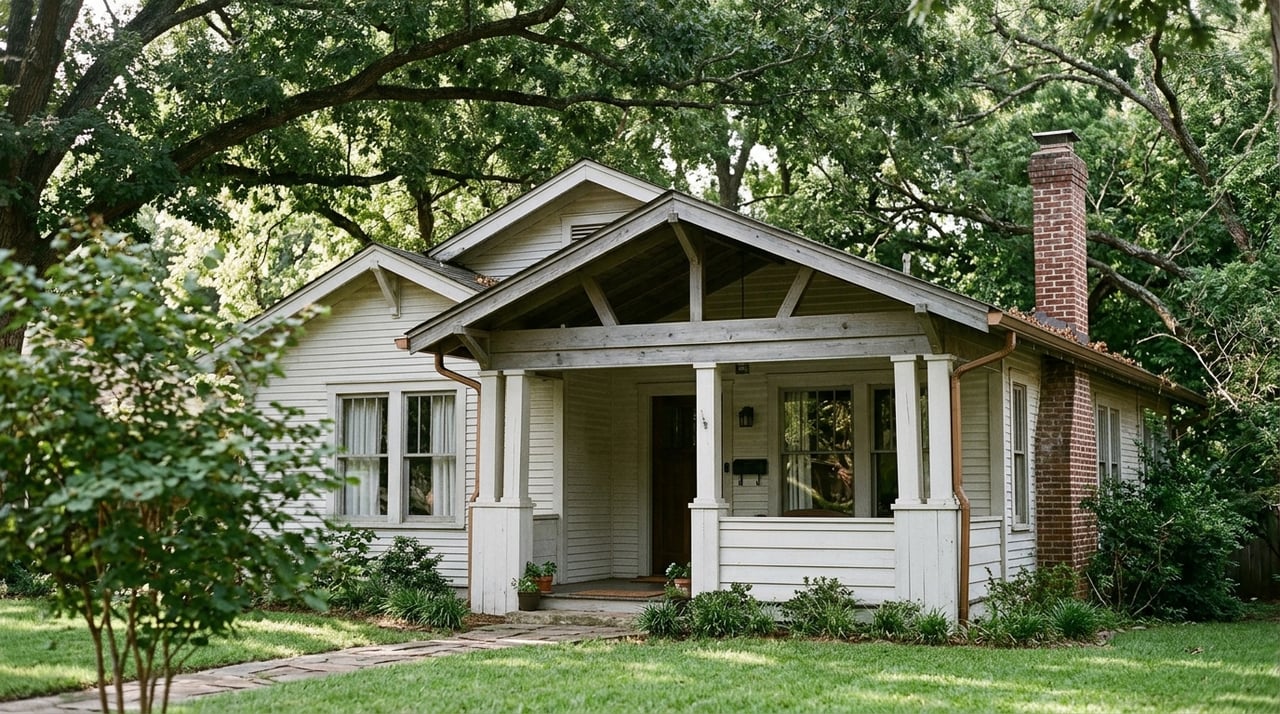
An investor we talked with this spring had done the math the way most people do it: buy a 1929 bungalow near Swan Lake Park, budget six weeks for cosmetic work, list it before the fall slowdown. The roof was original-ish, a 1990s reroof over the original decking, showing granule loss but not leaking. Nothing on the inspection report screamed emergency. The flip stalled anyway, and it stalled on the one item nobody had flagged as risky: the roof itself.
That is the pattern worth understanding before you buy or renovate anything inside Midtown's historic pockets. It is not that old houses have more problems. Every Tulsa home built before 1960 carries some version of aging systems. What is specific to Swan Lake, Yorktown, Tracy Park, and the other Historic Preservation overlay districts tucked inside Midtown is that a single repair, the roof, sits inside two separate approval processes that run on different clocks and answer to different questions. One asks whether the new roof looks like the old one. The other asks whether the roof is a good enough risk to insure. Satisfying either one does nothing for the other, and if you do the work before securing both, you can end up with a roof the city won't approve, an insurer that still won't bind, or both.
Two Gatekeepers, Same Repair
The Tulsa Preservation Commission requires a Certificate of Appropriateness for exterior alterations, repairs, and new construction inside any locally zoned Historic Preservation district. That review exists to protect the visual character of the neighborhood, and it is triggered by scope, not urgency. Replacing more than half of a roof surface in an HP district almost always requires commission review, and the preferred standard is in-kind replacement, meaning a 1920s Tudor that originally had wood shakes or clay tile is expected to get something that reads the same way, not the cheapest asphalt option a contractor has on the truck. Some Tulsa-area HOAs layer on their own requirement for Class 4 impact-resistant shingles, which can narrow the material choices further once you're also working within what the commission will approve.
None of that has anything to do with how an insurance underwriter looks at the same roof. Carriers price risk off age and material condition, not appearance. A roof over 20 years old is frequently eligible only for actual cash value coverage rather than full replacement cost, and some materials, including wood shake, can be declined outright regardless of how well they've been maintained. So the same physical repair gets evaluated twice, once by a design review board asking "does this match the district," and once by an underwriter asking "is this a good bet," and a homeowner who assumes clearing one gate clears both is the person who finds out otherwise at the worst possible moment, usually right before a closing or a draw request.
Here is how the three approvals actually stack when a Midtown historic property is involved:
| Approval | What triggers it | What it requires | Typical timeline effect |
|---|---|---|---|
| City Certificate of Appropriateness | Exterior work in an HP overlay district, including roof replacement over roughly half the surface | Application to Tulsa Preservation Commission staff, sometimes a full Commission hearing | Adds an estimated 2 to 4 weeks on top of the standard 1 to 3 week residential permit timeline |
| Insurance underwriting | Roof age, knob-and-tube wiring, galvanized or cast iron plumbing | Inspection, sometimes a requirement to complete rewiring or repiping before the carrier will bind | Runs on its own schedule and can stall a binder for weeks if remediation is required first |
| Lender closing or draw conditions | A signed insurance binder is required to fund | Proof that coverage is active | Cannot move until the first two are resolved, sometimes in either order |
The problem is not any one of these steps. It is that they don't share information and don't run in a fixed sequence. A buyer can get insurance-approved and then have the city reject a roof material. A buyer can get city approval and then find out the carrier wants a rewire done first. Either way, the lender is waiting on both.
What Actually Needs a Certificate of Appropriateness
Not every historic-sounding Midtown address is HP-zoned. Tulsa has a longer list of neighborhoods on the National Register of Historic Places, including Maple Ridge, Owen Park, Riverview, Tracy Park, and Yorktown, but National Register status by itself doesn't require design review. Only the neighborhoods that have gone through the separate local process of adopting Historic Preservation zoning, among them Swan Lake, Yorktown, Tracy Park, and North Maple Ridge, actually require a Certificate of Appropriateness before exterior work begins. If you're evaluating a property, this is worth confirming directly with the Tulsa Preservation Commission rather than assuming from the neighborhood name alone.
Inside an HP-zoned district, the commission draws a distinction between work that needs full review and work that doesn't:
- Under certain conditions, Tulsa Preservation Commission staff can issue an HP Permit without sending the project to a full Commission hearing
- The commission also recognizes specific exemptions from the HP Permit process, which staff can walk through for your exact scope of work
- Larger projects, including roof replacements over roughly half the surface, additions, new construction, and demolition, typically require the complete review process
The Tulsa Preservation Commission's permit office is the first call to make before signing a contractor, not after. Staff can tell you in a single conversation whether your specific scope of work needs a hearing or can be handled administratively, which is the difference between a two-week wait and a much longer one.
One detail that matters more than it should: some contractors specialize in exactly this kind of work. A-Best Roofing, a Tulsa roofing company, has described doing custom sheet metal fabrication at their shop on East 3rd Street to replicate historic copper flashing and gutter profiles for Swan Lake bungalows, work that off-the-shelf materials can't replicate. Hiring a crew that has never pulled a Certificate of Appropriateness before is how projects end up back at the start of the review queue.
Why the Insurer Is Running a Separate Clock
The roof isn't the only place where a Midtown property's age creates friction with a carrier's underwriting rules, it's just the one most likely to also involve the city. Two other systems show up constantly in older Midtown homes and neither one requires a COA, since they're typically interior work, but both can hold up a policy just as effectively.
Homes in Midtown neighborhoods built primarily between the 1920s and 1950s often still carry original cast iron or galvanized plumbing, which corrodes from the inside over decades. Insurance underwriters treat homes built before 1980, and especially before 1950, as a distinct risk category, and many carriers will require an electrical inspection, and in some cases full rewiring, before they'll write a policy on a home with active knob-and-tube wiring. Replacing that wiring typically runs somewhere between $12,000 and $36,600 depending on the size of the home, and insurers generally want to see full replacement rather than a partial splice, since a house with any active knob-and-tube left in it stays in the same underwriting category regardless of what percentage has been addressed.
Foundations add a third layer, and this one is closer to a Tulsa-wide condition than a Midtown-specific one. The expansive clay soil under much of central Tulsa shifts with seasonal moisture, and pier-and-beam foundations, common in Midtown, Kendall-Whittier, and Florence Park, are particularly exposed to crawl space moisture and wood rot on top of the seasonal shift. None of that triggers a Certificate of Appropriateness, since foundation work usually isn't visible from the street, but it absolutely shows up on an insurance inspection and can be the reason a carrier asks for a repair before binding.
Running the Clocks in Parallel
The fix isn't complicated once you see the sequencing problem for what it is. It's a matter of not treating city approval and insurance approval as steps that happen one after another.
Before writing an offer on a property in an HP-zoned Midtown district, call the Tulsa Preservation Commission and ask directly whether the scope of work you're planning needs a hearing or can be staff-approved. Get that answer in writing if you can. At the same time, get a plumbing and electrical inspection during your option period rather than waiting until after closing, specifically so you know before you own the house whether a carrier is going to require a rewire or repipe before binding a policy. If the roof needs replacing, get both a contractor experienced with historic material requirements and a sense from your insurance agent of what roof age and material will actually qualify for full replacement cost coverage, not just what the commission will approve aesthetically. Keep every permit, inspection report, and completion certificate from remediation work, since that paperwork is what convinces an underwriter to quote standard rates instead of routing you to a surplus lines carrier.
None of this eliminates the friction. It just means you're not discovering a second gatekeeper after you thought you'd already cleared the only one.
A Few Quick Questions
Does every home in a Midtown historic-sounding neighborhood need a Certificate of Appropriateness? No. Only properties inside a locally adopted Historic Preservation overlay, such as Swan Lake, Yorktown, Tracy Park, and North Maple Ridge, require COA review. Many other Midtown addresses are listed on the National Register of Historic Places, which carries prestige but not the same local design review requirement.
How long does a Certificate of Appropriateness actually take once submitted? Historic review is generally estimated to add 2 to 4 weeks on top of Tulsa's standard 1 to 3 week residential permit timeline, though scope and whether the project needs a full Commission hearing versus staff approval both affect that window.
If my roof only needs partial repair, do I still need a Certificate of Appropriateness? Minor repairs that don't change the roof's design or material typically qualify for exemption or staff-level approval. The full Commission review is generally triggered when the replacement covers roughly half or more of the roof surface. Confirming this with Tulsa Preservation Commission staff before starting work is the only way to know for certain in your specific case.
If you're weighing a renovation or a purchase inside one of Midtown's historic pockets, the sequencing above is exactly the kind of thing worth walking through before you're under contract, not after. Howard Grant works these Midtown streets directly, from Swan Lake to Yorktown to Maple Ridge, and can help you map out which approvals your specific property will actually trigger. Schedule a free consultation before you write the offer, not after the roofer already has a ladder against the house.